Context
One ecosystem. Harder than it sounds.
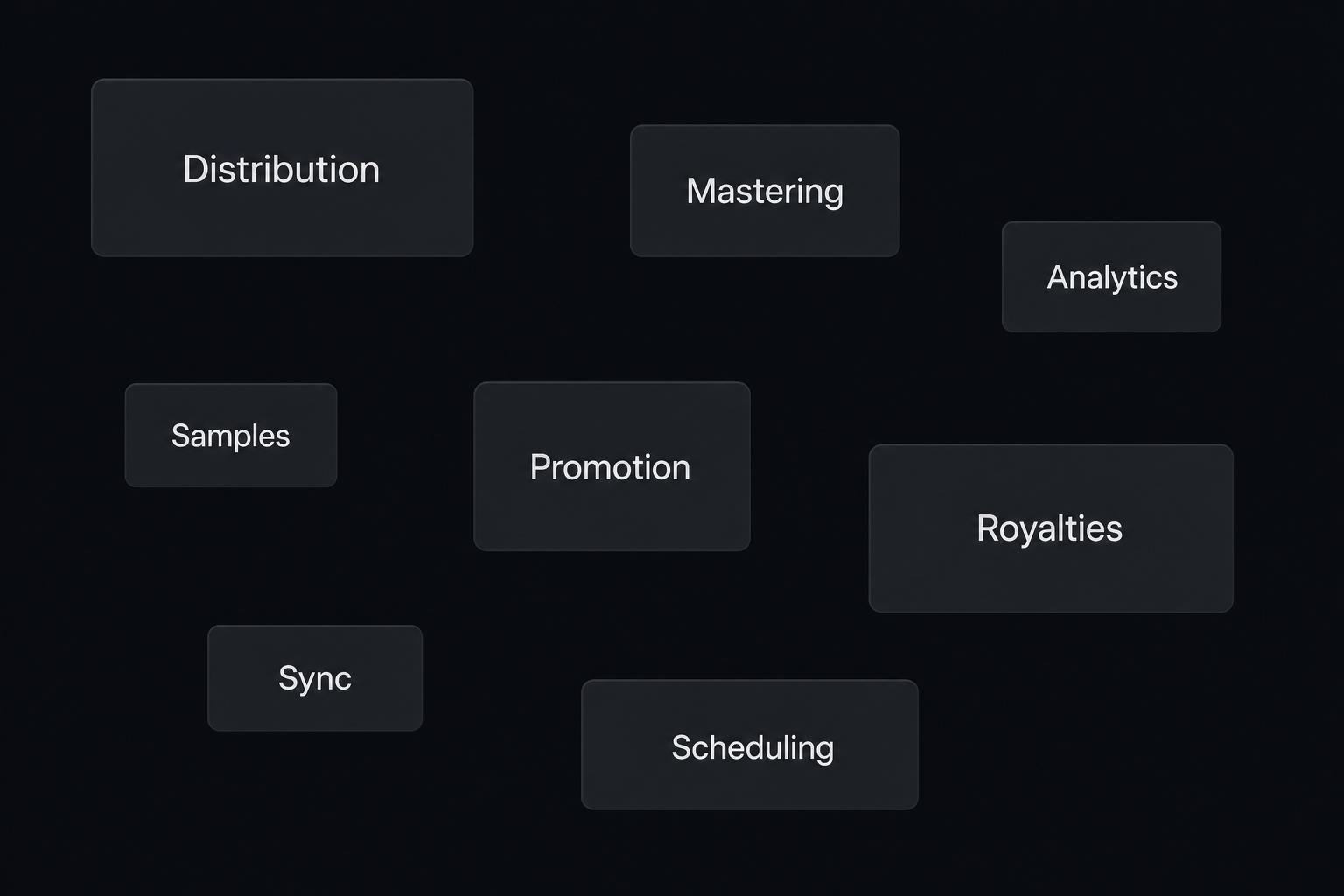
What independent music looks like in 2026. Your distribution sits on one platform. Your mastering lives somewhere else. Your analytics, your samples, your playlist pitching each hide behind their own login, on their own billing cycle, talking to nobody. The average working artist manages six to eight of these tools simultaneously. None of them know each other exists.
Yamaha Music Innovations wanted to change that. Creator Pass was their bet: a tiered subscription service covering the full creative journey, from making music to releasing it where each pass gives creators access to a curated set of industry-leading tools matched to where they are in the process. Beginner, Producer, or Podcaster. One login, one bill, the right tools for the right stage.
We came in to build the platform. Not the version that looks great on stage at SXSW, but the one that still works correctly eight months later when nobody's watching.
"There's always a gap between what teams announce at launch and what's actually running underneath. We came in to close that gap before it opened."
The Challenge
The same four things break every time.
We've seen enough of these builds to know where the seams crack. Not because the idea is wrong, but because most teams solve the visible problem, the billing page, the partner logos, the tier structure, and kick the invisible problems down the road. That road gets expensive fast.
- Identity drift. When a creator logs into six platforms with one subscription, their profile lives in six places. The moment one falls out of sync, a name change or a billing update, you've created a support problem that neither team can fully own.
- Cancellation as a trap. Platforms that hide cancellation terms or cut access mid-cycle don't retain creators. They delay the inevitable and collect a bad review on the way out. The short-term numbers look fine until they don't.
- Analytics that stop at the platform edge. A distributor tracks uploads. A mastering tool tracks files. Neither answers the question an artist is actually asking: did this release work? Without instrumentation that crosses platform lines, nobody can answer that.
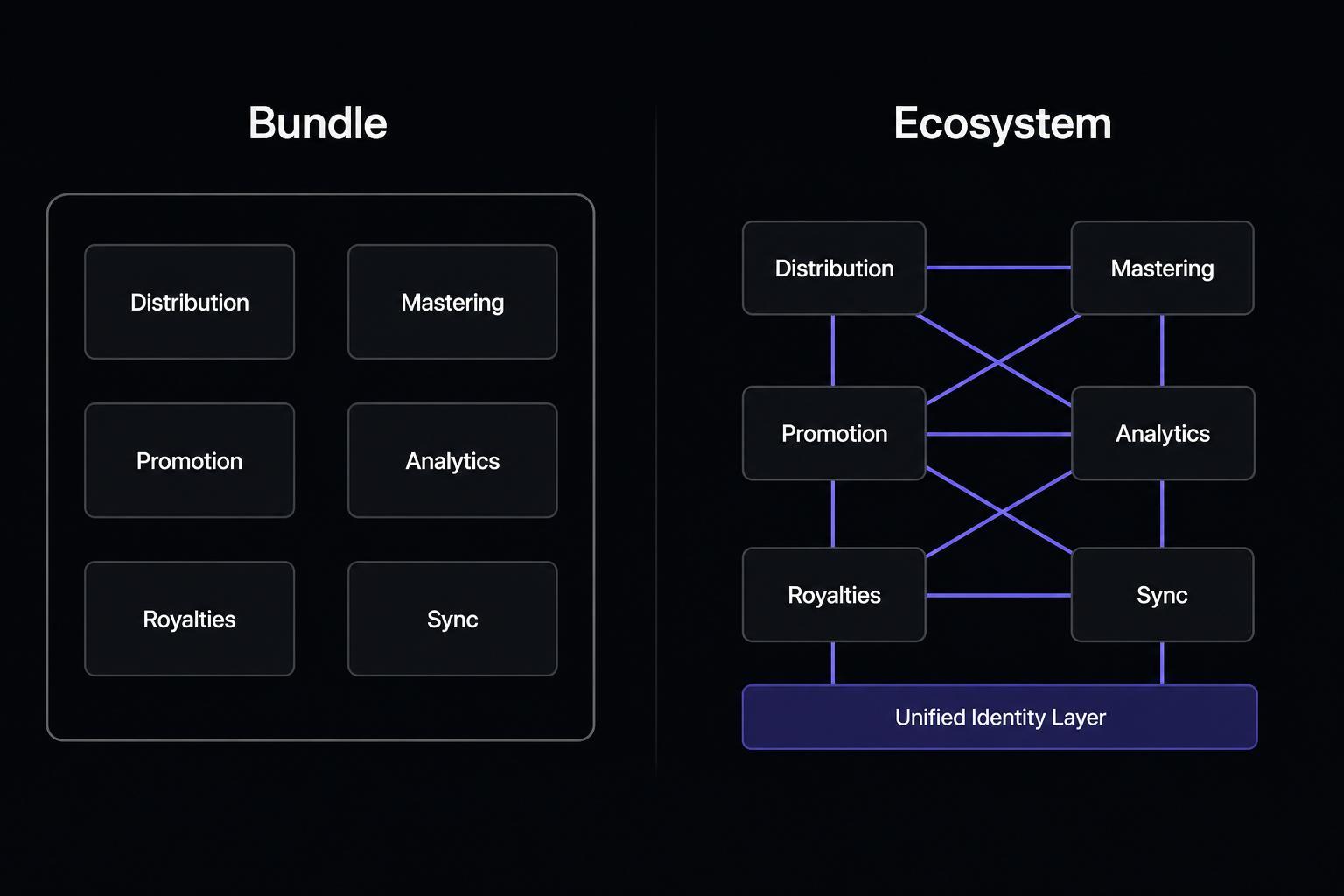
- Partners running their own roadmaps. The integrations that feel deep at signing tend to drift as partners chase their own priorities. Without commercial terms designed to sustain that depth, the ecosystem starts looking like a bundle by year two.
What We Built
Six things. One platform that holds.
Headless Shopify Plus on Hydrogen
Yamaha Music Innovations needed full control over how this felt, the brand, the experience, every pixel. But they also needed Shopify's billing infrastructure underneath. Hydrogen gave us both. We built a completely decoupled frontend on top of a commerce engine that handles subscriptions at scale, without letting one compromise the other.
Unified identity via AWS Cognito SSO
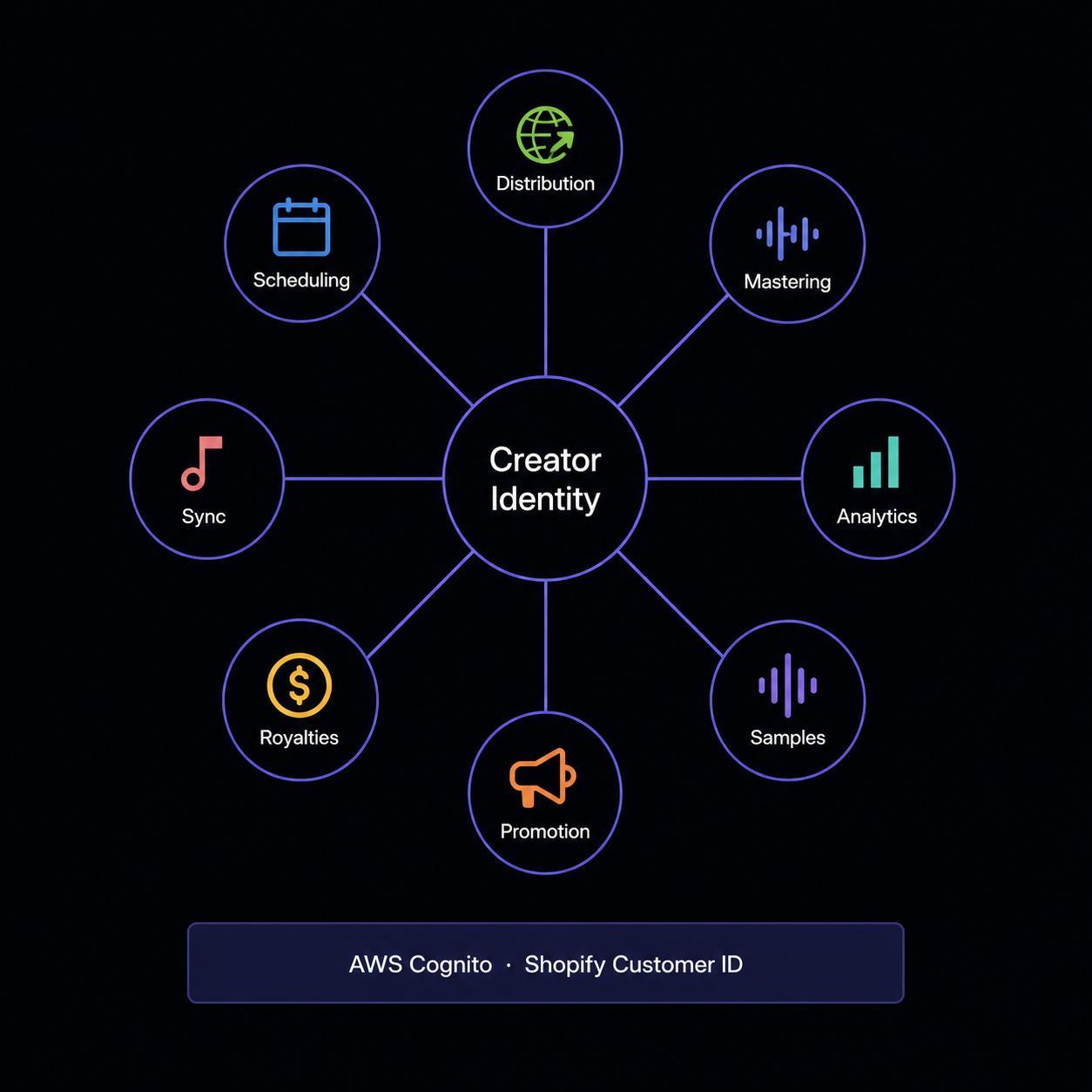
This is where we spent the most time, and rightly so. We linked each creator's Cognito identity directly to their Shopify Customer ID, so when anything changes, a subscription upgrade, a billing cycle ending, a partner access grant updating, it propagates across all 21 platforms automatically. The creator never notices. That's the point. One record. Everywhere it needs to be.
Trial engine with abuse prevention
The free tier had to work as a real on-ramp, not a timer. We built a trial system that converts to full billing automatically, sends a 24-hour heads-up before it does, and tracks usage across product families so the same person can't reset their trial by switching products. Straightforward in concept, fiddly in execution.
The Fairness Flow
When someone cancels, they keep access until the end of the period they already paid for. The portal shows them exactly when that is. A daily automated job handles the cutoff with no edge cases, no surprise charges, no angry support tickets. We pushed for this because the data backs it up: creators who cancel without feeling cheated come back. And they bring people with them. Trust is harder to rebuild than it is to keep.
Stage-based passes
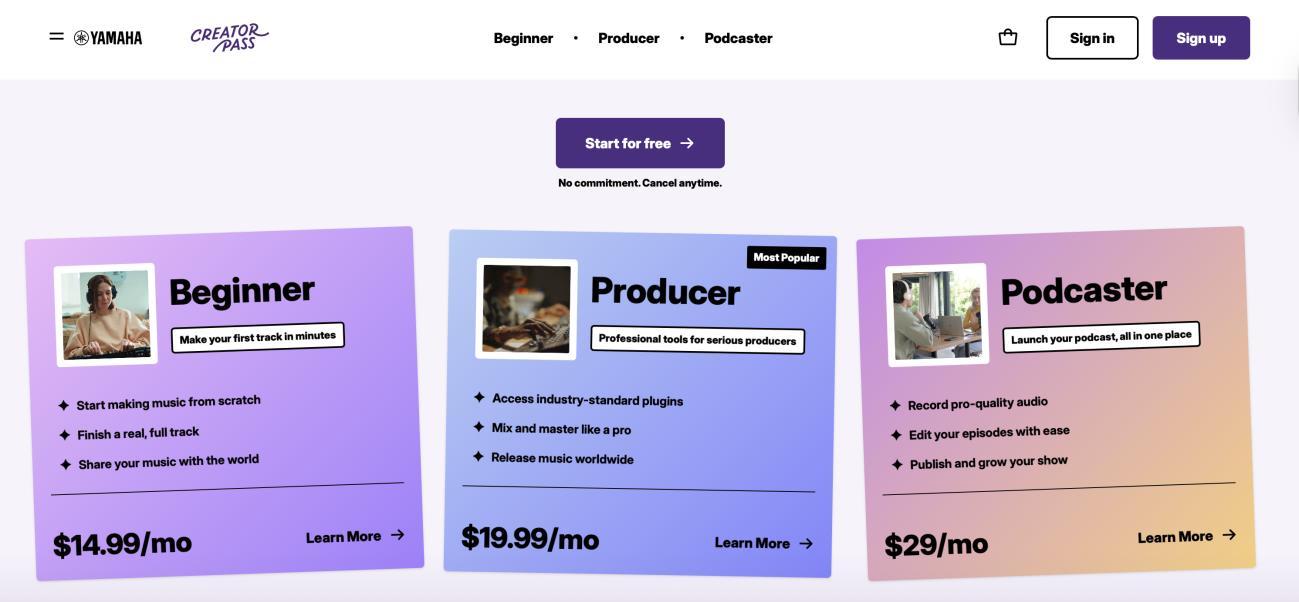
Beginner, Producer, Podcaster. Not feature grids, but creator stages. The Beginner pass puts real tools in front of someone on day one, Output Creator and LANDR because a starting tier that doesn't help anyone isn't an on ramp; it's a billboard. Producer layers in Output One, Output Arcade, and Groover for artists actively preparing a release. Podcaster brings in Riverside for end-to-end podcast production. We followed the workflow, not the feature catalogue.
Analytics dashboard
We built MRR, ARR, churn, and trial-to-paid conversion tracking directly into the merchant admin from day one. Standardized, plan-level, no retrofitting. The question "which of this is actually driving revenue?" has an answer from the moment the platform goes live.
Results
Shipped at SXSW. No encore needed.
3 passes · 20+ partners · 1 login · from $14.99/mo
- We launched on schedule in March 2026 at SXSW.
- The identity layer held across all 21 partners through post-launch updates that would have broken a thinner integration.
- Cancellations run clean.
- The trial engine converts without drama.
- Yamaha now has MRR visibility they didn't have before.
- And the headless build means they can evolve the experience without touching the billing layer underneath it.
Final Note
Most platforms skip the hard parts. We specialise in them.
Unified identity across partner ecosystems. Billing logic that doesn't crack under real conditions. Integrations that still work a year after everyone stops paying attention to them. That's the work TarkaLabs does, and it's what we did for TuneCore, SoundCloud, and Yamaha Music Innovations.
If you're building a creator platform and you already know where the gaps are, or you've hit them before, we'd like to hear about it.
_tech
used


